Wastewater / Recycled Water
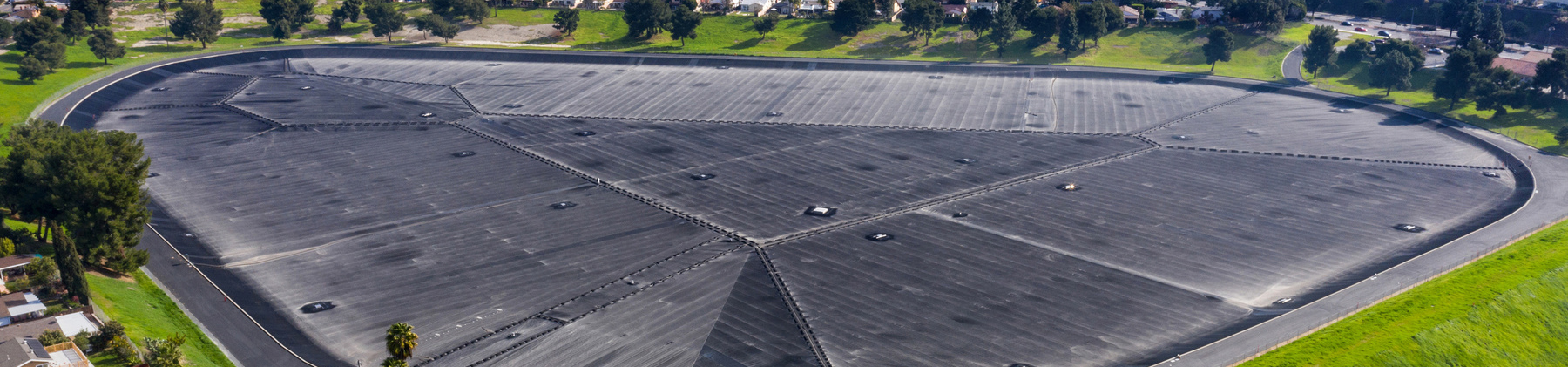
The El Toro Water District Water Recycling Plant (WRP) is located in Laguna Woods serving portions of the cities of Laguna Hills, Mission Viejo, Aliso Viejo, Lake Forest and all of the City of Laguna Woods.
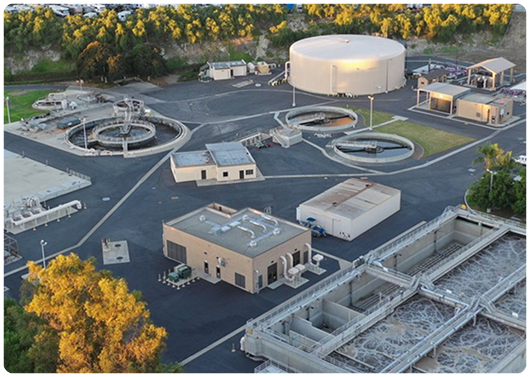 The WRP is one of the oldest water recycling plants in Orange County. Production and delivery of recycled water for golf course irrigation has existed since the WRPs inception in 1963, at which time the District served a total population of about 125 on 4,750 acres of land.
ETWDs current population is 53,145. The District has been able to meet its water demands from a combination of water resources and technology that optimally promote use of water conservation practices, water importation and recycled water treatment and delivery.
The District participates in ongoing regional wastewater solids treatment through a partnership with Moulton Niguel Water District. The Regional Treatment Plant facilities are located in the city of Laguna Niguel adjacent to the Regional Park. The regional partnerships between neighboring agencies and regulatory entities provide an economic, environmentally sensitive and efficient regional mechanism for effluent disposal, biosolids recycling, and expanded recycled water programs to serve South County customers within and outside our service area boundary.
What is wastewater?
Wastewater (or sewage) consists of water that has been used in sinks, showers, bathtubs, toilets, washing machines, and dishwashers before entering the ETWD sewer system.
What can I flush or pour down the drain?
Many people utilize their toilets and sinks as a trash can. Medication, sanitary products, wipes, and oils are often flushed/poured down the drain which can cause pipes within your own home to clog and can cause major plumbing issues. Only the 3 Ps can be flushed Pee, Poop and Paper!
Why treat wastewater?
ETWD is responsible for treating the wastewater of over 51,000 residents in order to protect public health and the environment. If the wastewater were to be discharged directly into the ocean, there could be significant negative impacts to both humans as well as the natural environment.
How do we collect wastewater?
ETWD s collection system is comprised of more than 158 miles of pipeline ranging from 4 to 24 inches. The sewer collection system was designed to utilize gravity as much as possible in order to reduce pumping costs. However, in order to move the wastewater over the hills and valleys that are scattered throughout the service area, lift stations are required to pump it to a point where it flows via gravity. The final destination of the collected wastewater is ETWDs Water Recycling Plant located in the city of Laguna Woods.
In order to keep these pipelines free of obstructions and flowing, ETWD crews are constantly cleaning and checking the sewer lines for blockages with specific equipment.
What is recycled water?
Recycled water is the treating and repurposing of wastewater for alternative uses like landscape irrigation.
Wastewater Treatment Process
The wastewater treatment process involves several steps.
Preliminary Treatment
The first step is the Preliminary Treatment. The incoming wastewater enters the bar screen where large objects like rags, sticks, sand, gravel, eggshells and other foreign objects are removed that could create problems for the downstream processes.
Primary Treatment
Next, the wastewater undergoes Primary Treatment. In this step the wastewater flows into the grit chamber where the heaviest materials settle to the bottom and lighter materials rise to the top. These materials are removed from the wastewater and are hauled to a regulated landfill. Fine screens then remove coarse organic materials for further treatment.
Equalization Influent Pump Station
The equalization basins provide temporary storage of wastewater when the incoming flow exceeds the average daily flow. Wastewater is consistently pumped back into the flow stream to maintain a steady, equalized flow through the secondary treatment process. The equalized flow enhances the overall treatment process.
Secondary Treatment
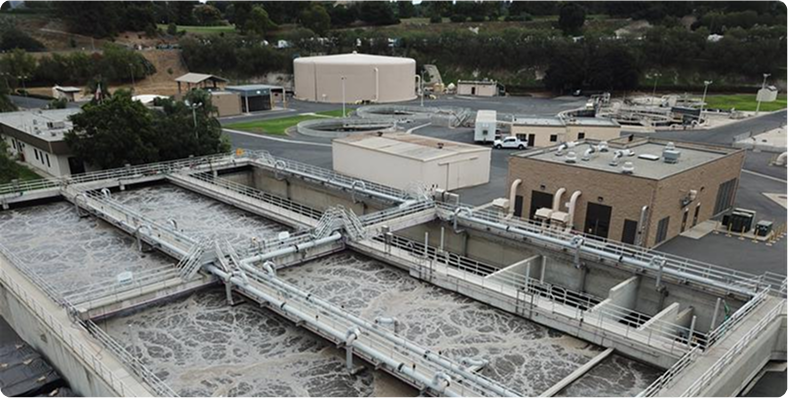 The Secondary Treatment process is a biological process. Air is continuously injected into the wastewater in aeration basins, which fosters the growth of microorganisms that consume organic material in the wastewater. The cultivated microorganisms eventually settle out as solids in the secondary clarifiers. A portion of the settled solids is returned to the aeration basins and the excess is removed for disposal.
Solids Disposal
Solids produced during various stages of treatment are thickened and hauled to the Moulton Niguel Water District Regional Treatment Plant. Organic matter in the solids is stabilized in digesters. The digested solids are dewatered and conveyed offsite for biosolids recycling. Methane gas, a byproduct of digestion, is piped to the Cogeneration Building to fuel generators that supplement the plant's power needs.
Tertiary Treatment Water Recycling
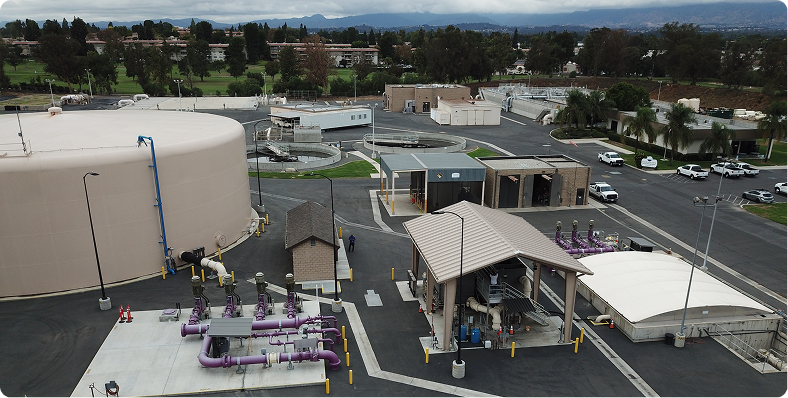 Water recycling consists of disinfecting and filtering the secondary effluent producing recycled water suitable for use for landscape irrigation. Tertiary treatment is an additional filtration process that follows the current primary and secondary treatment processes. Tertiary treatment provides expanded water recycling on a local and regional basis.
In 2012, the District began a Recycled Water Expansion Project to increase the treatment and delivery of recycled water through a new tertiary treatment facility. Simultaneously, the District built a new recycled water distribution system that ultimately included 140,000 feet of recycled water pipelines beneath the roadways in portions of Laguna Woods and the northwest portion of Laguna Hills. This distribution system is completely separate from the drinking water distribution system and used for irrigation purposes only.
The tertiary treatment plant is designed to produce as much as 4 million gallons per day with a peak hour pumping capacity of over 5,000 gallons per minute.
In the tertiary treatment process, secondary treated effluent flows through cloth media disc filters. The cloth media traps solids and debris, while the filtered water flows into a basin where chlorine is injected for disinfection. Chlorine disinfection further polishes and removes viruses and pathogens. The chlorine infused water travels through a series of baffled channels to ensure compliance with chlorine contact time requirements. The tertiary treated water is then ready to be pumped into the recycled water irrigation distribution system.
The Recycled Water Expansion Project included the conversion to recycled water over 275 dedicated irrigation meters in the cities of Laguna Woods and Laguna Hills. This project reduced the District s imported potable water requirements by over 900 acre feet per year. The total annual recycled water production amounts to approximately 1,400 acre feet per year.
The recycled water system significantly reduce the amount of treated wastewater discharged into the ocean and helps reduce the greenhouse gasses that result from pumping water into the region. This reduction in the dependence of imported water is a huge benefit to our communities and future generations in saving our most precious resource Water!